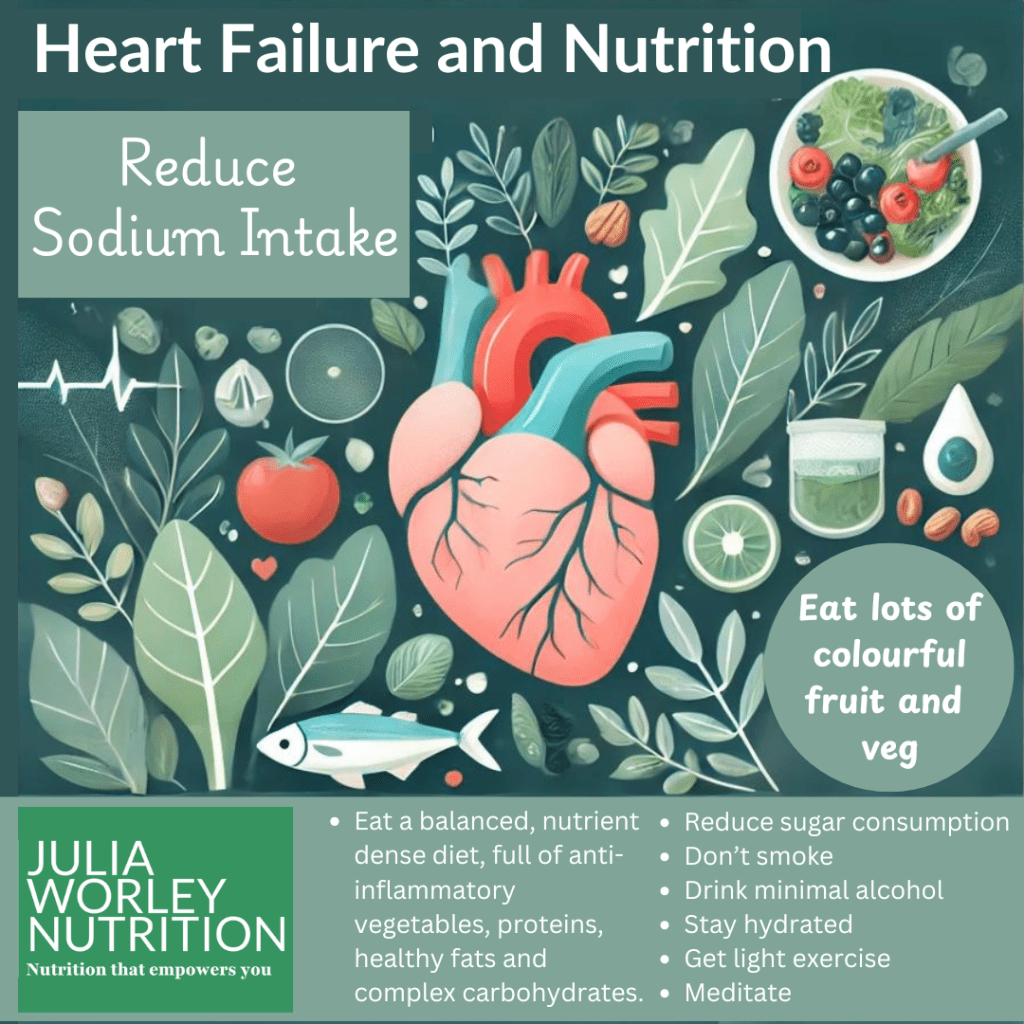
Anyone with heart failure will want to tread carefully before making changes to their diet or lifestyle. We must always seek advice from our GP or Cardiology Consultant, and make extra checks, because small changes can have big repercussions for us.
Since my diagnosis in 2017, I’ve found that keeping a conscious eye on my food – my salt intake, my blood sugar levels, my weight and blood pressure, foods I’m intolerant to, fats, fried foods and alcohol – have really impacted the way I feel from one day to the next. I’ve also very carefully learnt about electrolytes and micronutrients that support heart function.
There is now so much scientific evidence around how specific nutrients and self-care practices can affect heart failure day to day, and overall prognosis, that I feel it important to dive in and make the most of this. The link between inflammatory foods and heart failure risk or heart failure outcomes is being further proven, as is, for example, the beneficial effects of supplementing CoQ10 in heart failure sufferers.
My cardiology consultant is wonderful for prescribing me the latest, optimal medication and keeping me monitored, but it is not within her remit to tell me how to support my health through food and nutrients. And it’s hard for individuals without training to navigate the contradictory information Dr. Google gives us.
If you’re struggling with heart failure and would like some nutritional support, reach out and let me know how you’re doing. Being heard is part of healing – tell me how you’re doing!
 Julia Worley Nutritional Therapist
Leave a comment